After the Soviet attack on Poland on 17 September 1939, the NKVD arrested several thousand Polish citizens. In addition, during the defensive war, over 14,000 prisoners of war, mainly officers, were taken captive. Lavrentiy Beria (head of the Soviet secret police) described them as ‘hardened enemies of Soviet power.’
Mass deportations began, carried out in several waves. It is estimated that in February 1940 alone, approximately 140,000 people were deported from the eastern provinces of the Republic of Poland to the USSR, to the mines of Donbas, factories and labour camps in Siberia and Kazakhstan.
On 2 March 1940, in Moscow, the head of the NKVD and People's Commissar for Internal Affairs of the USSR, Lavrentiy Beria, sent note 794/B to Joseph Stalin. "There are currently a large number of former Polish army officers, Polish police and intelligence officers, members of nationalist and counter-revolutionary parties, members of counter-revolutionary insurgent organisations, fugitives and others in NKVD camps and prisons in the western regions of Ukraine and Belarus. All of them are hardened enemies of Soviet power, enemies of Soviet power who show no signs of improvement," he informed the leader of the Communist Party in a secret document.
However, the Soviet authorities decided that even more repressive measures than deportation should be taken against ‘hardened enemies’. Beria emphasised that officers, police officers and other inmates in the camps ‘were attempting to continue their counter-revolutionary activities and were conducting anti-Soviet agitation’. He requested that they be given the maximum penalty under special circumstances – death by firing squad.
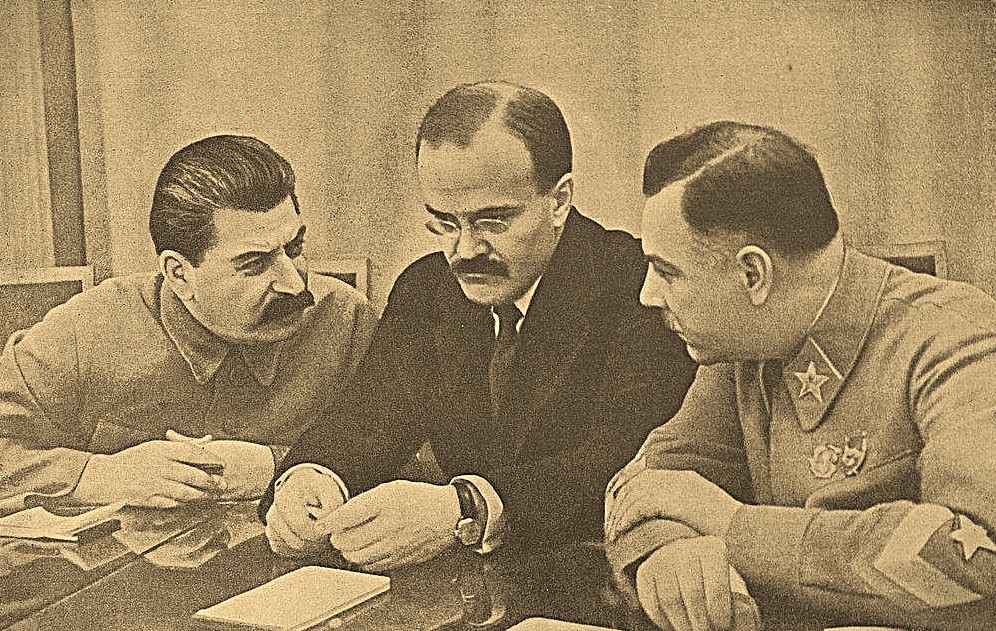
On 5 March 1940, the Political Bureau of the Central Committee of the All-Union Communist Party (Bolsheviks) adopted a resolution approving Beria's proposals contained in his memorandum of 2 March. Secret Decision No. P13/144 was adopted by Joseph Stalin and the authorities of the All-Union Communist Party (Bolsheviks): Anastas Mikoyan, Vyacheslav Molotov and Kliment Voroshilov. It was also approved by the Chairman of the Presidium of the Supreme Soviet of the USSR, Mikhail Kalinin, and the Deputy Chairman of the Council of People's Commissars, Lazar Kaganovich. In early April 1940, the NKVD began mass executions of approximately 4,400 Polish prisoners of war from the camp in Kozelsk.
The NKVD chose a forest near Katyn as the place of execution. Nearly 3,900 prisoners from Starobelsk were murdered in the Kharkiv NKVD, and their bodies were buried in Pyatykhatky. 6,287 prisoners from the Ostashkov camp were shot by NKVD executioners in Kalinin (now Tver). The murdered were buried in the Mednoye area. In addition, 7,305 citizens of the Republic of Poland (civilians) imprisoned in the eastern provinces seized by the USSR after 17 September were murdered.


