On October 27, 1939, the Germans arrested Stefan Starzyński, the commissioned mayor of the capital city from August 1934 (with his appointment updated in March 1939), in Warsaw City Hall. The blow was well-placed, as this politician, associated with Piłsudski’s camp, demonstrated a heroic stance during the siege of the capital. He also served as Civil Commissioner at the Warsaw Defense Command at that time (from September 8-28, 1939).
It was thanks to his efforts that civilian organizations participating in opposing German attempts to capture the city (including the Citizens’ Guard, the Capital Committee for Social Self-Help, and the Volunteer Battalions for the Defense of Warsaw) were intensified. He also directed the work of the Capital Defense Council, a body modeled on a similar structure from the Polish-Soviet War. He worked closely with those responsible for the city’s defense: General Walerian Czuma, General Juliusz Rómmel, and General Tadeusz Kutrzeba.
Despite at least two opportunities to leave Warsaw, he declined. Instead, he reportedly told General Rómmel: “Just as you share the fate of your soldiers, so too will I remain among my own.” He communicated with the residents of the Capital City through engaging and emotionally charged radio speeches. Testimonies from residents of the besieged capital clearly demonstrate that they played a significant role in sustaining the spirit of resistance of the determined defenders.
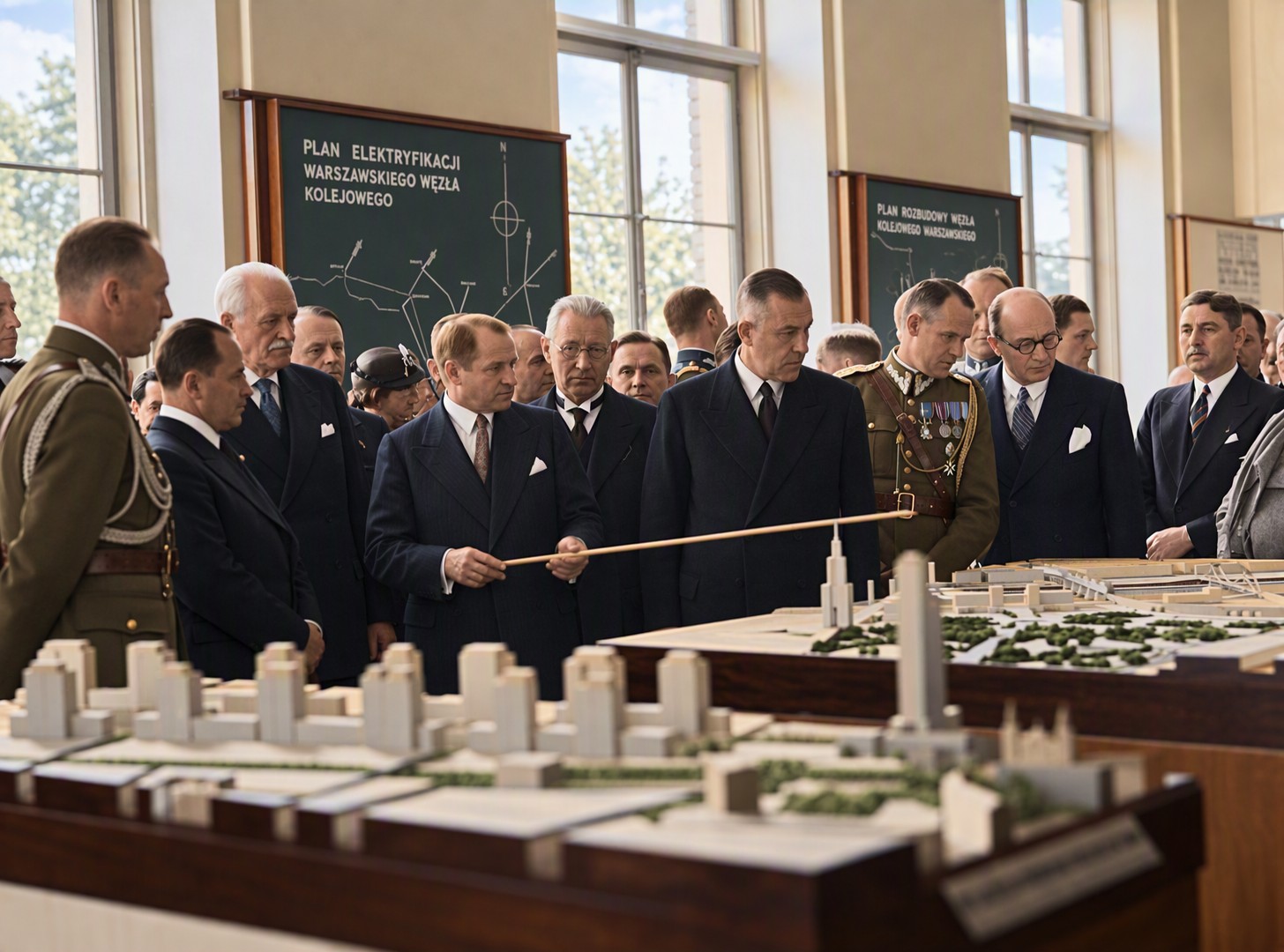
This spontaneity is not surprising, given that during his tenure as president of the city entrusted to him, Starzyński repeatedly expressed his commitment to its development. This resulted in, among other things, the intensive development of housing (over 100,000 such units in Żoliborz, Ochota, and Mokotów, among others), numerous renovations of historic architecture (including the Blank Palace and the Arsenal), and the opening of the National Museum building to visitors. It should be added that this was in difficult economic conditions, as the Second Polish Republic, following the recession (initiated by the crash of the New York Stock Exchange in October 1929), recorded a favorable budget balance only in 1936.
This was compounded by the increasingly complex international situation and the necessary increase in the Polish Army budget, which reached 30 percent of the annual national income. After his arrest, Starzyński was transported to the Gestapo headquarters in Warsaw on Aleja Szucha. He was then transferred successively to the German Central Detention Center (7 Daniłowiczowska Street) and the prison on Rakowicka Street, before finally being held in solitary confinement at Pawiak Prison.
Attempts to determine the date of death of the indomitable president dragged on until 2014, when, thanks to researchers from the Institute of National Remembrance, they were able to verify the earlier date of his death (March 19, 1944). According to the IPN’s findings, the Germans murdered Starzyński on December 21 or 23, 1939. The murder likely occurred in or near Warsaw.
For those eager for knowledge:
From Warsaw to legend. Stefan Starzyński and the Construction of a Modern Capital 1934-1939, Łódź 2025
B. Michalec, S. Starzyński – Host of the Capital in 1934-1939, Warsaw 2021
Warsaw of the Future. Catalog of the Exhibitions “Warsaw of the Future” 1936, “Old Warsaw” 1937, and “Warsaw Yesterday, Today, and Tomorrow” 1938, ed. M. Krupa, Warsaw 2023