White and Red Flags, Music In the streets, children on their parents’ shoulders, and the national anthem sung together. Neighbors meeting for a parade, families discovering the history of their city, friends cheering on the runners. This is what November 11th can look like, and in many Polish cities, it is exactly like this. National Independence Day is an invitation to share the joy of having our own country, being able to cultivate our culture, and deciding about our future. It’s worth leaving home on this day and feeling like we’re part of a larger community.
We are celebrating the anniversary of a great success. After 123 years of partition, Poland regained its independence. Behind this achievement lay the efforts of successive generations: soldiers and social activists, diplomats, teachers, artists, and families who passed down the language, tradition, and devotion to their homeland. November 1918 opened the door to building a shared state. Today, the anniversary of regaining independence allows us to look back with gratitude on that effort and remember how much can be achieved through perseverance and commitment.
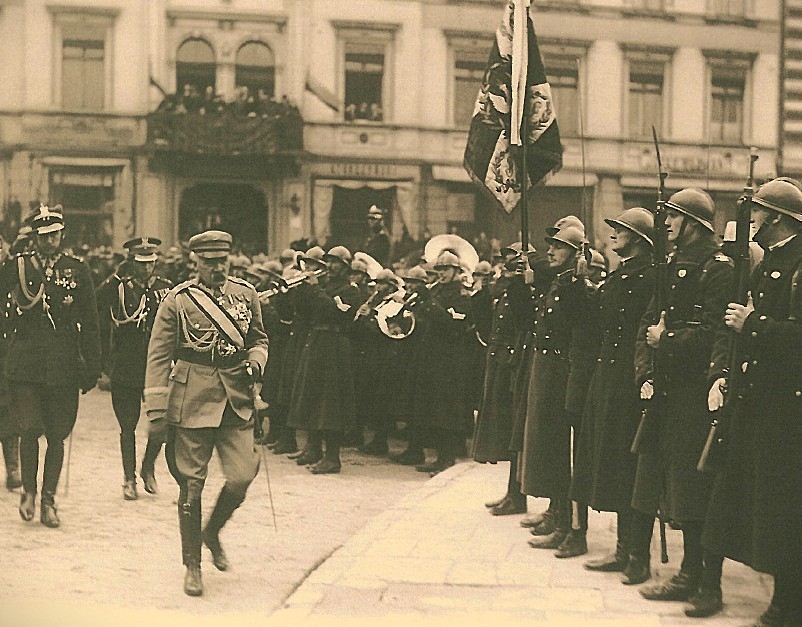
November 11th is the symbolic date of regaining independence, a process encompassing many events and lasting much longer than a single day. It was then, in 1918, that Józef Piłsudski seized military power from the Regency Council, and the armistice ending World War I began on the Western Front. In the Second Polish Republic, the tradition of November celebrations developed gradually. Their significance grew after 1926, while November 11th was granted the status of a statutory national holiday in 1937. Before the outbreak of another war, it was celebrated as such only twice.
How was the celebration celebrated in reborn Poland? The celebrations had a military and state character, but were also accompanied by social and cultural events. Parades, concerts, performances, and ceremonial ceremonies were organized. In Kutno, the first anniversary of regaining independence was commemorated on November 9, 1919. The ceremonies included a procession with orchestras and an evening theatrical performance. Although the interwar celebrations also reflected the political divisions of the time, they left behind a tradition worth recalling: a celebration shared, present on the streets, in schools, and in the life of the local community.
A contemporary example of such a celebration is the Gdańsk Independence Parade, organized since 2003. Entire families, schools, scouts, seniors, associations, and reenactment groups participate. The white-and-red parade, group singing, and commemorative photos of participants create a tradition in which everyone can find their place. The streets become a meeting place for people of all ages, experiences, and interests, united on this day by the joy of independence.
A similar spirit is found in Wrocław. The joyful Independence Parade unites generations, and school parades allow young participants to creatively speak about freedom, Polish history, and national symbols. Such events help us learn about the past through participation and shared experiences. For young children, they can spark an interest in history, and for adults, an opportunity to spend time with loved ones and discover something new about their own city.
Poznań brings its own recognizable tradition to November celebrations. The name day of Święty Marcin Street, celebrated on the same day, fills the city with gatherings, cultural events, and the delicious taste of St. Martin’s croissants. The slogan accompanying last year’s edition, “Do Good!”, reminded us of kindness and responsibility for others. This is an example of how local customs can enrich November celebrations, giving them a character close to the residents.
In these various forms of celebration, the most important thing remains the gathering. Singing the anthem together, chatting during a walk, or participating in a neighborhood event allows us to feel connected to people we pass by every day. Children will remember a handmade red and white ribbon, a story told by a grandfather, or participating in their first parade. It is from such experiences that a lasting attachment to place, history, and community can grow.
For the Jan Karski Institute of War Losses, researching and commemorating Poland’s wartime experiences is also a way to remind us of the value of independence. Recognizing the scale of wartime destruction, the broken lives of people, and the lost heritage, we all the more appreciate the opportunity to live in peace, develop culture, and pass it on to future generations. Joyful celebration is an expression of gratitude for this opportunity. It allows us to see history as a source of strength, hope, and inspiration for collective action.
We encourage you to find time for such a gathering on November 11th. Invite family, friends, or neighbors. Join a parade, attend a concert, a historical walk, or an event at a local museum. Let’s also think about those who find it harder to leave home on their own. A shared celebration can begin with a simple invitation and an offer of companionship.
You can already plan your participation in this year’s celebrations. The program of events for November 11, 2026 includes:
-
Gdańsk – 24th Independence Parade. A white-and-red parade will march through the city streets, with the participation of residents, families, schools, scouts, and reenactment groups. The program includes a group singing of the national anthem, a commemorative photo of the participants, and the singing of Polish hymns and songs.
-
Wrocław – 23rd Joyful Independence Parade. School processions will be part of the event. Students will prepare costumes and props referencing freedom, Polish history, and national symbols, combining participation in the celebrations with creative interpretations of their meaning.
-
Poznań – Saint Martin Street Name Day and the RUNPOLAND Independence Run. A Saint Martin’s Day fair will be held at the ZAMEK Cultural Center, scheduled from 11:00 AM to 9:00 PM. Active enthusiasts can choose a 10-kilometer run through the streets of the city center, starting at 11:11 AM, while their loved ones can cheer them on along the route.
-
Białystok – “I Run for Independence”. Organisers offer a 10-kilometre run, a symbolic 1,918-metre run and a walk. Children’s races over age-appropriate distances are also planned, with participation possible from the age of two.
-
Gorzów Wielkopolski – “Freedom: I Love and Understand” concert, 7:00 PM. The Gorzów Philharmonic invites you to a musical journey through Polish history. The program will include patriotic and soldierly songs, as well as songs resonating with generations, including “I Love Freedom,” “Don’t Ask About Poland,” and “My and Your Hope.”
-
Warsaw – Independence Run and Independence Mile. The Mile for young participants will begin at 10:00 AM, while the first zone of the main race will begin at 11:11 AM. The program includes a joint singing of the national anthem, and the runners’ white and red shirts will form a living flag at the start.
-
Zgierz – the Independence Run in the Miasto Tkaczy Cultural Park. A 1,918-metre run, also open to young people aged 13 and over, starts at 11:11 a.m.; the main 11.11-kilometre run starts at noon. The start and finish are planned in the historic part of the town.
These are just a few suggestions. It’s also worth checking out what your own town has to offer—a local community center, museum, school, or social organization. Before participating, please familiarize yourself with the current programs on the websites of the cities and organizers, including hours, meeting points, and registration or ticket purchasing procedures.
Independence gives us the space to build a good, shared life. May November 11th be a day when this value is visible in our cities, towns, and villages: in the red and white colors, smiles, kindness, and openness to others. We have much to celebrate. Let’s celebrate together.
Photos: Gdańsk – City of Gdańsk Wrocław – wroclaw.pl, Oleksandr Poliakovsky Poznań – dobrypoznan.pl Poznań – codziennypoznan.pl Poznań – Piotr Skornicki / Agencja Wyborcza.pl Białystok – Polish Radio Białystok, Sylwia Krassowska Warsaw – wyborcza.pl, Adam Stępień Archives: National Digital Archives